Vessel Tide | A Guide to Essential Maritime Data Analytics Systems

Marine Fleet Management Software
in the Data-Driven Era

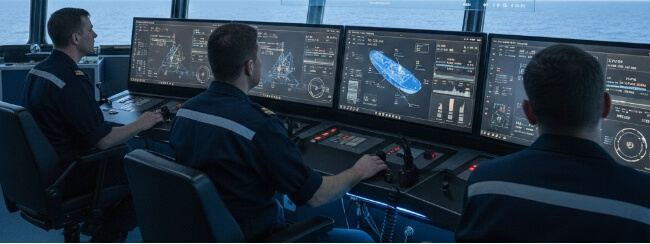
The volume of data surrounding vessels—including engines, navigation, fuel consumption, and weather—is growing rapidly, and approaches to utilizing this data are also evolving.

Software needs vary by company, depending on factors such as technical and operational challenges and fleet composition.

Accordingly, this page introduces three marine fleet management software options across technical domains, categorized by company type,to help you choose the right system.

3 Recommended
Marine Fleet Management Software

For Frequent Hazardous
or Long-Distance
Voyages

For Marine Fleet
Management Companies

MaSSA-One

MaSSA-One
* Image source: BEMAC Official Website
(https://www.massa-one.com/english/)
Core Capabilities
Condition monitoring and anomaly detection
  • Enables early detection of anomalies using data-driven automatic thresholds and expert-defined multi-condition detection.
  • In the event of a failure, real-time data helps speed up root-cause identification, reducing downtime.
  • This supports the prevention of future accidents and issues, contributing to reduced damage and losses involving vessels and cargo.

For Companies with
Frequent Business
in the EU

For Marine Shipping
Companies

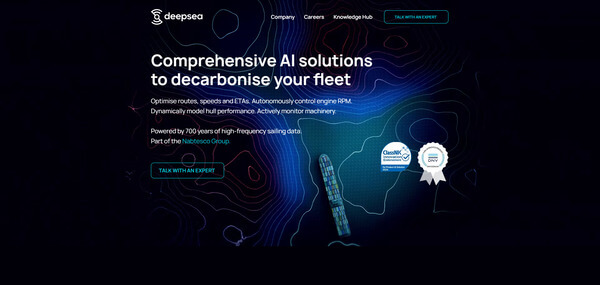
DeepSea

DeepSea
* Image source: DeepSea Official Website
(https://www.deepsea.ai/)
Core Capabilities
AI Fuel, CII &
Route Optimization
  • With the CII tracking feature, AI helps maintain and predict vessel performance.
  • AI dynamically evaluates speeds and routes to suggest more fuel-efficient alternatives
  • While complying with Europe-specific restrictions and regulations, it supports operations aimed at lower fuel consumption.

For Fleets with a Mix
of Older and Newly
Built Vessels

For Independent Ship
Management Companies

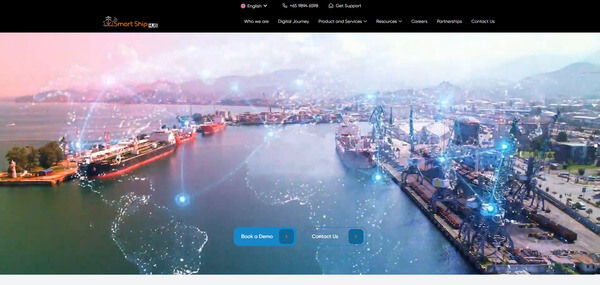
Smart Ship Hub

Smart Ship Hub
* Image source: Smart Ship Hub Official Website
(https://smartshiphub.com/)
Core Capabilities
Data integration across
a mixed fleet
  • Supports aggregation of vessel data across different manufacturers and standards, as well as data from multiple vessels.
  • Visualizes information distributed across onboard systems and supports building an environment for centralized management.
  • Supports information sharing between shore teams and fleets with older vessels, older equipment, newly built vessels and new equipment.

3 Marine Fleet Management Software
Systems in Detail

For Frequent Hazardous or
Long-Distance Voyages
For Marine Fleet
Management Companies

MaSSA-One

MaSSA-One
* Image source: BEMAC Official Website
(https://www.massa-one.com/english/)
Technical Strengths
and Product Features
MaSSA-One
* Image source: BEMAC Official Website
(https://www.massa-one.com/english/)
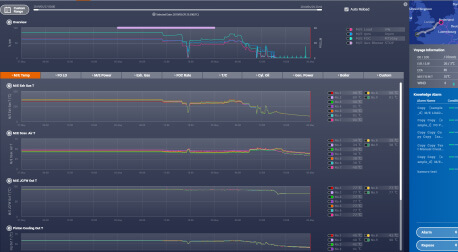
Example of shipboard
equipment monitoring:
In addition to onboard use, the system enables real-time visibility of onboard conditions from shore.
Standardizing
Experience for
reliable detection

By integrating crew expertise, individual sign-based assessments become shareable and reproducible.

It defines experience-based intuition as clear decision criteria, standardizing monitoring and enabling earlier anomaly detection.

Instant detection of
unusual behavior

Based on historical operating data, thresholds for normal ranges are set automatically or semi-automatically.

Because the approach is performance-based, it can isolate only behavior that deviates from normal patterns, improving the reliability of anomaly detection.

Easy to implement
without being tied to a
specific manufacturer

Because it supports a flexible configuration that is not tied to any specific manufacturer, it is also easier to implement on existing vessels.

It is also well suited to building an onboard data infrastructure with future CBM and remote support in mind.

Recommended for:
Systematizing individual
navigation know-how

Because the system can embed experienced personnel’s judgments and heuristics as monitoring rules, it is well suited to companies seeking to replace individualized anomaly detection and navigation decisions with reproducible operations.

Preventing major losses
from engine trouble

Through condition monitoring and anomaly detection, signs of abnormalities can be identified early, making it suitable for companies aiming to reduce losses and accident risks from unexpected incidents at sea.

Support Features
Technicians can
support system installation
and configuration

BEMAC, the provider of MaSSA-One, also undertakes marine electrical outfitting and power distribution systems.

By dispatching technicians to handle everything from equipment installation to onboard network configuration, this helps reduce the effort required for implementation and day-to-day operations, as well as the burden of troubleshooting.

Examples of Utilizing
MaSSA-One
Before
Insufficient data preventing
failure prediction and CBM

On existing vessels, even when data is available, criteria for judging abnormalities often vary by individual, which can lead to maintenance that relies heavily on experience and intuition.

After
Start with a minimal setup,
then scale to CBM

With MaSSA-One, the key decision cues used by experienced personnel can be defined as multi-condition alarms.

It can be expanded in stages, starting from monitoring where anyone can identify signs based on the same criteria.

Company Overview
Company name
BEMAC Corporation
Address
105 Noma, Imabari, Ehime 794-8582, Japan
Phone number
+81-898-25-8282
Official Website
https://www.massa-one.com/english/

For Companies with
Frequent Business in the EU
For Marine Shipping
Companies

DeepSea

DeepSea
* Image source: DeepSea Technologies Official Website (https://www.deepsea.ai/)
Technical Strengths
and Product Features
DeepSea
* Image source: DeepSea Technologies Official Website
(https://www.deepsea.ai/)
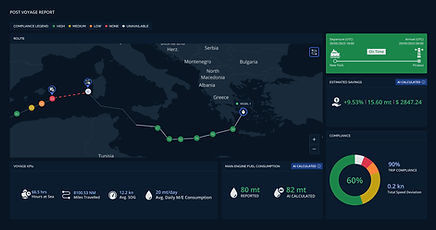
Optimizing fuel efficiency
and CII with AI:
Using AI digital twins to connect fuel consumption forecasting, CII tracking, and equipment monitoring.
Predicting
fuel consumption
with AI digital twins

It builds AI models that learn each vessel’s characteristics and delivers high-accuracy fuel consumption forecasts that factor in weather and sea conditions.

With this predictive capability, operators can take measures such as slowing down or adjusting routes, helping reduce fuel costs and the risk of delays.

Addressing CII ratings
through CII tracking

CII is a decarbonization regulation for international shipping introduced in January 2023, requiring annual CII calculations and ratings (A-E).

DeepSea includes functionality to track both current and forecast CII, making it suitable for companies that are responsible for quantifying their environmental impact.

Improving fuel efficiency
by keeping
operations on plan

For fuel efficiency and CII initiatives, the key is whether operations can be consistently maintained in line with the plan.

Through HyperPilot (automatic speed control), DeepSea supports plan-aligned operations, helping improve fuel efficiency and reduce variability in operations.

Recommended for:
Improving operations
through EU compliance

Environmental regulations are tightening on European routes, including the EU ETS.

Rather than stopping at meeting reporting requirements, it suits companies that want to improve operational efficiency through centralized management of fuel consumption, navigation, and CII to improve operational efficiency.

Standardizing speed
and route decisions

DeepSea uses AI to provide inputs for decision-making based on operating conditions and weather conditions.

By reducing reliance on individual judgment, it is well suited to companies looking to improve the efficiency of speed and route decisions.

Support Features
Hands-on support,
with hardware setup

The hardware used to collect onboard data is designed for easy installation, lowering the practical hurdles during implementation.

It also has a structured support system to help embed the system into day-to-day operations, including hardware training.

Examples of Utilizing
DeepSea
Before
Late detection delaying
CII countermeasures

Once the rating is finalized, speed and operating conditions may be reviewed in haste, which can result in reactive, ad hoc responses.

This can also leave internal explanations—and explanations to customers and cargo owners—with weak supporting evidence.

After
Taking early actions through
continuous CII tracking

By tracking CII alongside fuel consumption and expected operating conditions, operators can run simulations and plan countermeasures earlier, helping reduce last-minute actions just before the rating is finalized.

Company Overview
Company name
DeepSea Technologies
Address
24 Stadiou Str. 105 64, Athens
Phone number
+30 216 600 5599
Official Website
https://www.deepsea.ai/

For Fleets with a Mix of Older
and Newly Built Vessels
For Independent Marine
Fleet Management Companies

Smart Ship Hub

Smart Ship Hub
* Image source: Smart Ship Hub Official Website (https://smartshiphub.com/)
Technical Strengths
and Product Features
Smart Ship Hub
* Image source: Smart Ship Hub Official Website
(https://smartshiphub.com/product-services/vessel-reporting-system)
Example of centralized
data management:
In addition to high-frequency data, it also consolidates legacy data such as noon reports, enabling centralized management from condition monitoring to voyage performance.
Advanced monitoring
with high-frequency data

It uses high-frequency data covering 400 to 4,000 parameters (*) to identify signs of deterioration, issue alerts, and perform diagnostics.

Even for older vessels, flexible operation is possible by collecting whatever data can be captured and using it for diagnostics.

Better fuel efficiency
through visualization

It includes functions such as weather routing, route optimization, and fuel consumption management.

Even across fleets with different specifications, vessels can be compared using the same indicators, making it easier to run improvement cycles for each vessel.

Reducing workload
via remote inspections

With remote video streaming and remote inspection functions, the accuracy of inspections, maintenance, and repairs from remote locations is improved.

For companies where arranging ship visits is a bottleneck, this is an effective way to protect operational availability.

Recommended for:
Cross-fleet management
of old and new vessels

It standardizes variations in data across vessels to enable cross-fleet comparisons.

It is well suited to companies that want to manage complex fleets from a unified perspective and drive overall improvement.

Shifting from
vessel-specific to
fleet-level management

It enables integrated management of the entire fleet through ship-to-shore collaboration functions.

It is well suited to companies looking for a foundation to run day-to-day operations, not just to display data.

Support Features
Keeping operations moving
with remote support

With remote video, alert escalation, and support for keeping inspection timelines on track, Smart Ship Hub offers robust operational support features. It supports not only deployment of the tools, but also adoption in day-to-day operations.

Examples of Utilizing
Smart Ship Hub
Before
Fragmented data stalling
improvement efforts

Older vessels may rely mainly on noon reports, while newer vessels rely on high-frequency data—creating a mixed data environment.

Without consistent evaluation criteria, it is difficult to prioritize which vessels to improve—and what to improve—which can slow progress.

After
Visualizing fleet data
on a common basis

It consolidates legacy data, including noon reports.

By making it possible to view the entire fleet using the same indicators, comparisons become straightforward, making it easier to plan improvement measures and manage progress.

Company Overview
Company name
Smart Ship Hub
Address
2 Venture Drive, #19-18 Vision Exchange, Singapore 608526
Phone number
+65 9894 6598
Official Website
https://smartshiphub.com/

Why Maritime
Data Analysis
Is Needed Now

Why Maritime Data Analysis Is Needed Now Why Maritime Data Analysis Is Needed Now

Maritime data analysis is evolving from storing past records to forecasting and prevention. This section summarizes the importance of data utilization—covering operational optimization, early detection of failure signs, and compliance with environmental regulations—as an essential lever for cost reduction and stronger competitiveness.

Marine Fleet
Management
Software Providers

Explore our directory of marine fleet management software to make the most of your vessel data. Compare key features—from EU compliance to fuel savings and failure detection—to find the best fit for your fleet’s challenges.

Aggregates onboard data and enables ship-to-shore sharing. It supports early detection of anomalies through monitoring rules set by experienced personnel and automatic threshold settings based on performance data, helping the transition to CBM (condition-based maintenance) and reducing downtime.

Uses high-frequency data and digital twins for analysis to optimize the full workflow—from voyage planning and execution to post-voyage analysis. Through dynamic speed and trim adjustments, it helps balance fuel reduction with schedule adherence.

Specializes in collecting onboard signals and transferring them to the cloud, making it easy to lower the barrier to digitalization. Data can be accessed from the office or on mobile devices, enabling operations management and improvement cycles based on objective metrics.

Read more

Utilizes high-frequency telemetry data to manage fleet-wide performance through KPIs. It supports a single-system approach—from environmental compliance to operational optimization.

Visualizes fleet KPIs and monitors charter-party conditions such as speed and consumption. With real-time trend views and notifications, users can identify operational deviations earlier to ensure contract compliance.

Ensures the quality of high-frequency data while visualizing fleet-wide performance. Detecting early signs of CII deterioration and fuel efficiency loss to enable faster decision-making based on reliable data.

Uses AI simulations to develop voyage plans that balance ETA, fuel, and emissions, supporting operational efficiency and environmental compliance through weather-based route adjustments and plan-versus-actual analysis.

Integrates onboard sensor data to compare baseline values with actual operation. By distinguishing whether fuel consumption changes are driven by external factors or performance degradation, it enables targeted energy-saving measures and data-driven maintenance decisions.

Uses AI digital twins to forecast and manage fuel efficiency and CII with high accuracy. By calculating optimal routes and speeds based on weather and vessel condition, it supports emissions reduction through integration with automatic speed control.

Collects and analyzes onboard data across manufacturers to optimize fuel consumption and enable early detection of failure signs. Real-time visibility into operating conditions helps reduce downtime and maintenance costs.

Enables both fuel efficiency and schedule adherence through dynamic speed and route optimization based on weather. Monitors gaps between plan and actual performance to detect deviations early as a comprehensive management system.

Integrates onboard and onshore data, providing an end-to-end flow from visualization to machine-learning analysis. It reliably collects data even under challenging offshore connectivity, helping speed up onshore support.

Integrates automatic diagnostics for the engine room with advanced main engine analysis. Detects anomalies on a single platform to prevent propulsion loss and enable faster troubleshooting.

Collects and analyzes Mitsui engine data to monitor for early signs of anomalies. Drill down into specialized performance reports to support predictive maintenance and reduce crew workload.

FOP

Aggregates onboard data across manufacturers into a unified visualization and integration platform. Combined with analytical tools, it expands data utilization across fleet operations to improve overall efficiency.

Links ship and shore information to provide standardized incident response. AI-assisted watch support and operational visibility maintain maintenance efficiency, safe operations, and environmental compliance in an integrated way.

Integrates ship and shore data to centrally manage remote equipment monitoring and predictive maintenance. By consolidating fragmented information, it helps support both operational improvement and compliance with environmental regulations.

What Is Marine
Fleet
Management
Software?

Marine fleet management software is not a one-size-fits-all solution.

For this reason, start by defining how you'll use your onboard data, then select the features that best address your operational challenges.

This section covers key features and implementation benefits across technical domains—such as performance monitoring, safety management, and port management—to help you choose the right system.

Performance Monitoring

Performance Monitoring

Analyze voyage and engine data to evaluate hull and equipment efficiency against design performance. Early detection of fouling and degradation helps optimize fuel costs and ensure compliance with regulations like CII.

Safety Management

Safety Management

Digitize Safety Management Systems (SMS) based on the ISM Code to centrally manage incident reports and audits. Streamline ship-to-shore sharing to establish proactive safety frameworks and meet global maritime regulations.

Port Management

Port Management

Centralize schedule coordination, agent arrangements, and port cost settlement. These systems improve visibility into port costs and activity records, preventing overpayments through automated invoice checks. By streamlining approval workflows, they help optimize overall operating costs.

Automated Voyage
Reporting

Automated Voyage Reporting

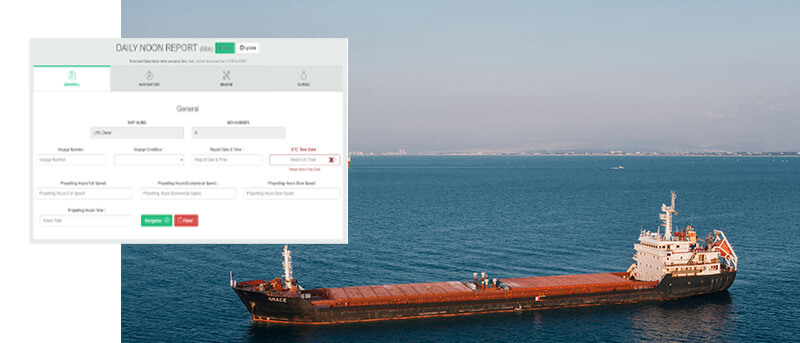
Automate voyage logs (noon reports) via IoT integration to eliminate manual data entry. Accurately record fuel and position data to prevent input errors and data tampering, ensuring compliance with regulations like CII.

Hull Stress Monitoring

Hull Stress Monitoring

Measure real-time strain and motion to monitor structural loads that cannot be assessed visually. Convert weather impacts and fatigue into actionable data to reduce damage risks, supporting safe operations and maintaining asset value.

Mooring Line
Tension Monitoring

Mooring Line Tension Monitoring

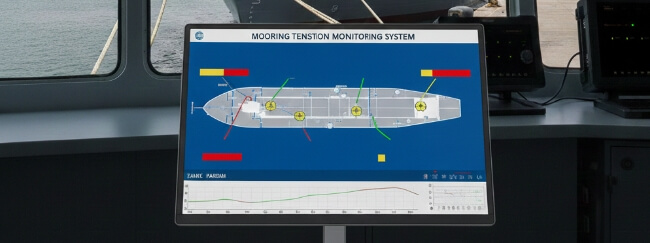
Visualize real-time mooring line tension and alert operators immediately when safety thresholds are exceeded. Track tidal changes and cargo loads to prevent line breakage and accidents, ensuring safe mooring management complementing on-site expertise with continuous monitoring.

Marine Condition
Monitoring

Marine Condition Monitoring

Continuously monitor equipment condition using real-time sensor data to detect early signs of anomalies. Enable predictive maintenance to prevent unexpected failures, optimizing inspection intervals and reducing downtime and maintenance costs.